Posts

Showing posts with the label lesson plans

Lesson Reflection: Peardeck + What is History Class?
Image
I am a part of a Facebook Group for AP World History teachers that also has a shared Google Drive (that I actually currently manage). It is a collection of amazing resources and one of my favorite lessons that comes from the drive is called "They Thought The Earth Was Flat" by Bill Strickland. It engages students in the common story of Christopher Columbus being one of the few people in the 15th century to believe the earth was round. The students read and analyze a series of 'documents' that seem to support this myth and then shows them the Farnese Atlas which was created in the 2nd century. After a few more pieces of evidence start to poke holes in this longstanding story of Columbus the lesson asks students to consider how historians look for validity in sources and how historians do the work of figuring out our past. I love this lesson because it really introduces what historians do and how messy history can be. It gets students thinking and talking about ho...
Lesson Reflection: My Day One Lessons

Image
A goal I have set for myself this year is to reflect on lessons daily. I've been trying to think of the best way to talk about the lessons, what worked and what didn't and for now, I am going to try and use my blog as the platform for how I reflect on my lessons. I want to make sure that I document what I do each day and what I need to change and improve for next year. To start, here is the lesson I did for the first day of school. I wanted the focus to be on building a class culture and getting to know each other while also starting to introduce classroom procedures and expectations. I want to make sure students leave excited to come back the next day. I had originally planned to do a station rotation of getting to know you games and I would sit at one station and play with the students at that one station, giving me a chance to really talk to them and get to know them but when I looked at my class lists and saw that my class sizes varied significantly, my brain just wa...

EdTech: Hyperdocs in a Limited Tech Classroom

Image
My classroom is not one-to-one and the devices I do have often have a lot of issues because they were small sets of devices that I was asked to pilot to see if they would be the best fit for busy classrooms like mine. Because of this I often have to take things like hyperdocs and find ways to make them work for limited device classrooms. Three Things I Do To Make Hyperdocs Work In A Limited Device Classroom  1. We Use Worksheets  GASP! I said that evil word that has supposedly been banned from teaching. But to be real, the easiest way to do this is to have a worksheet (yup, I still use worksheets), partner kids up, and then have them follow along on a shared device. You could use Nearpod or Peardeck (both of which are amazing tools) but if the students need to go back to the information and review it only the student logged in will get a copy of the notes they take with Nearpod or Peardeck. This where I will defend worksheets, the value of the worksheet has to...

Digital Citizenship Week 2018: Classroom Twitter Account

Right now on Twitter, you can follow my student-led classroom account @TweetsfromB210 to see students using Social Media in positive ways. It is important to me to meet students where they are at while also teaching them and modeling for them positive digital footprints. Hey guys it’s me Migs taking over! We’re doing something super exciting today. Stay tuned! #ERHSTweets #ByarsMeetsWorld pic.twitter.com/HAD8X9Ctjh — 🌍👨‍🎓👩‍🎓B210 Tweets👩‍🎓👨‍🎓🌎 (@tweetsfromB210) October 16, 2018 I pick one student each class to host the account by sending them this link via Remind. It's an easy way to teach digital citizenship, give students voice, engage with an authentic audience, and build your class culture. All week I am going to share some of my favorite ways to bring social media into the classroom to help create Social Media Leaders and change the conversation around digital citizenship from a list of "don't" to a list of "do." - Mrs. Kathry...

Grading Practices: How I Plan Using Standards Based Grading

Image
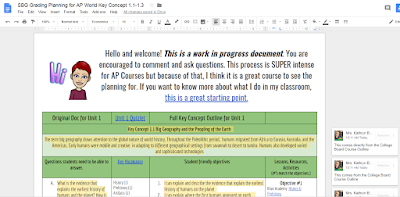
I've talked a lot about the challenges of reforming your grading practices but I want to give you a chance to see what those challenges really look like. I am currently rewriting and revising all of my AP World History Course with more specific objectives. A mistake I made last year with that course was making the objectives too broad and not having students reflect often enough, s o now I am taking a totally different approach and you are invited to visit my in progress planning document and leave questions and comments on the document as I work on it! One common question I get is about skills based objectives. The Common Core standards put literacy in every classroom (which I love) but the standards also ask teachers to assess skills and the skills are typically not one and done, they build throughout units or throughout the year. They are a part of multiple lessons and it is hard to determine the best way to approach reoccurring skills when Standards Based Grading. This i...

Civics and the new California HSS Framework

Last time, I shared how I plan using the new C3 Framework and the California HSS Framework that was adopted in 2016. Today I want to talk about one of the four main components of the framework and how I work to incorporate it in my classroom: Civics and Citizenship. The Framework states: From the earliest grade levels, students learn the kind of behavior that is necessary for the functioning of a democratic society in which everyone’s fundamental human rights are respected. They learn sportsmanship, fair play, sharing, respect, integrity, and taking turns. They should be given opportunities to lead and to follow. They should learn how to select leaders and how to resolve disputes rationally. They should learn about the value of due process in dealing with infractions, and they should learn to respect the rights of the minority even if this minority is only a single, dissenting voice and to recognize the dignity of every person. These democratic values should be taught in the class...

Planning with the New California Framework

I love our history department and I love how committed my colleagues are to creating engaging lessons for our students. Recently, I've been working with my department on how best to approach the three massive documents California Social Science teachers are supposed to incorporate in their classrooms.  This slide deck reviews how I approach the new California Framework and the existing California State Standards.  What I have found most useful are these planning sheets ( Grade 8 , Grade 10 ) I use when working through what I've used in the past and comparing it to what the Framework asks teachers to now focus on.  I plan to create another deck with resources on how to mix the framework, content standards, and the CCSS Literacy Standards but for now feel free to check out this deck ! It works kind of like a Hyperdoc so feel free to click the links and engage in the activities.

World History Lessons: Maps that Explain World War II

Image
Today I want to share a lesson I made based on this Vox Article . I think maps in the history classroom are incredibly important tools for helping students understand the world. They can tell stories in unique and engaging ways and far too often map work if simply coloring, labeling, and memorizing. What I love about that Vox list, is that the maps tell stories that are much more rich and engaging than "here is where things are." I decided to make an introduction to World War II where students explore some of the maps from that article prior to diving into any of our World War II content. I took 14 of the maps from that article and created a Google Slides deck from them. I will either have students explore the maps on their devices using this link ( http://bit.do/WWIImaps ) or print the maps and do a gallery walk. I created this worksheet to go along with it and plan to host a discussion with the class, reviewing their answers to the reflective questions when t...

Book Review: Essential Questions: Opening Doors to Student Understanding Jay McTighe & Grant Wiggins

Image
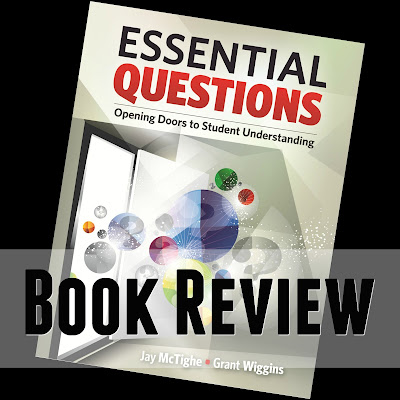
I love the new C3 Framework from the NCSS . I think building a history class around 1. Developing questions and planning inquiries; 2 Applying disciplinary concepts and tools; 3 Evaluating sources and using evidence; and 4 Communicating conclusions and taking informed action is a fantastic way to make the learning real and engaging for students. Each step in the C3 Framework  provides meaningful opportunities for students that are applicable outside of the history classroom. What I am not a fan of is how California took the idea of questioning and inquiry and created questions for their framework that were anything BUT compelling or engaging. So when working with the new framework for California , I needed more help and guidance on how to develop questions for the inquiry process. Leave it to the awesomeness of Twitter to give me guidance: Have you looked at this book? https://t.co/lzgKcaAgE3 It simplified the compelling question process for me. #casocstu...

In the Classroom: My First BreakoutEdu

Image
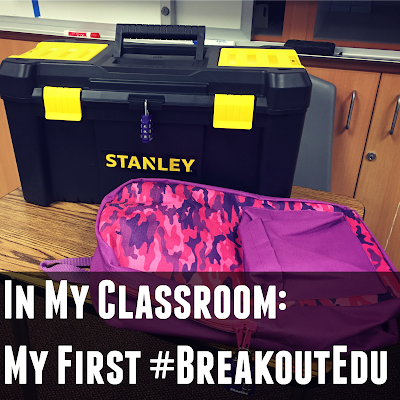
When I started this year a colleague of mine was obsessed with #BreakoutEdu and she kept building these incredibly intricate lessons and showing pictures of students highly engaged in their work. During first semester, I had dipped my toe in the water by making a scavenger hunt that had some locked google forms that students had to open to get the next clue but they were mostly review questions and did not have the same elements of a true breakout.  I knew I wanted to do something big to bring up morale and energy when students returned from Spring Break and I also wanted a lesson that was a mix of review and new information, to get students back into World War II after a week away. So I created by first Breakout lesson and it was amazing.  What is BreakoutEdu? Well, it's kind of like an escape room for your classroom but instead of having students locked in a room and trying to break out of it, they are trying to break into a series of bags and boxes that each h...